Posts

Medical abbreviations

Medical abbreviations were made to quickly but accurately document. Here’s a list of medical terminologies that you should know. Abbreviations & Acronyms Meaning aa Of each, equal parts ABR Absolute bed rest Abd. Abdomen ac Before meals AD Admitting diagnosis A&D Admission and discharge Ad lib As desired, if the patient so desired ADL Activities of daily living Adm. Admission Ad. Spec. Admission  urine specimen A.M. or a.m., AM or am Morning amb Ambulation, walking, ambulatory,   able to walk amt. Amount AP or A.P. Appendectomy aqua Water or H2O @ At Approx. Approximately B&B or b&b Bowel and bladder training bid or B.I.D. or b.i.d. Twice a day b.m. or B.M. Bowel  movement ,  feces B.P. or BP Blood pressure BR or br or B.R. or b.r. Bedrest BRP or B.R.P. or brp Bathroom privileges BSC or bsc Bedside commode °C Celsius degree (or centigrade) c With Ca Cancer Cath. Catheter CBC or C.B.C. Complete blood count cc or c.c Cubic centi...

Dealing with critical incidents and trauma (Key points)

Image
Seek safety and support. Be in contact with your family and friends. Check symptoms (acute stress reactions). Contact the staff welfare section. Overview A critical incident is a sudden, unexpected and overwhelming event, that is out of the range of expected experiences. You may feel intense fear, helplessness, horror and completely out of control. After such an abnormal event, most people experience reactions that are disturbing and difficult to accept. Inform yourself about typical responses (acute stress reactions) you can expect in the aftermath of a critical incident, how to develop a ‘healthy' response, and when to seek support. Managers and colleagues should be aware that initial support is critical. How you support and respond to colleagues who have experienced a critical incident may influence the duration and depth of their symptoms. Main guidance Underlying policies, principles and/or standards Critical incidents include: Accidents (such as traffic accidents)...

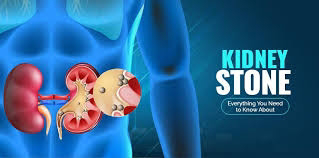
Kidney stones

Image
KIDNEY STONES Pain in your back or side, blood in your urine and nausea/vomiting alongside the pain are symptoms of a kidney stone or stones. Most kidney stones are about the size of a chickpea, but they can also be as small as a grain of sand and as large as a golf ball. Small stones can pass through your urinary tract but you might need surgery for the larger ones. ▪️What’s a kidney stone? A stone in your kidney is an irregularly-shaped solid mass or crystal that can be as small as a grain of sand up to the size of a golf ball. Depending on the size of your kidney stone (or stones), you may not even realize that you have one. Even small stones can cause extreme pain as they exit your body through your urinary tract. Drinking fluids may help the process, which can take as long as three weeks. A large kidney stone can get trapped in your ureter (the tube that drains urine from your kidney down to your bladder). When this happens, the stone can cause bleeding and keep u...

Constipation Nursing Diagnosis & Care Plans

Image
Constipation Nursing Diagnosis & Care Plans Constipation is the decrease in normal frequency of bowel movements. It is also typically accompanied by difficult or incomplete passage of stool and stool that is often extremely hard and dry. Constipation is very common and one of the most frequently seen gastrointestinal complaints. It can affect anyone however the following individuals are more prone to constipation:   Elderly:  typically, these individuals are less active, have slower metabolisms, and less muscle strength along the digestive tract   Women (particularly pregnant women or shortly after childbirth):  changes in hormones can cause constipation and for pregnant women the baby often pushes on the intestines resulting in a slower passage of stool   Individuals with neurological disease In this article: ¹Causes (Related to) ²Signs and Symptoms (As evidenced by) ³Expected Outcomes ⁴Nursing Assessment ⁵Nursing Interventions ⁶Nursing Care ...

Fever Types,Causes, Symptoms,Treatment, and Prevention

Image
Fever Types,Causes, Symptoms,Treatment, and Prevention Fever Types, Causes, Symptoms, Treatment, and Prevention – Fever is a common condition that affects people of all ages. This blog provides an in-depth look at the Fever Types, causes, symptoms, treatment, and prevention. Fever Definition Fever is a temporary increase in body temperature, usually caused by an infection or other medical condition. It is a natural response of the body to fight off infections and other harmful agents. Fever is a common condition that affects people of all ages and can be caused by a variety of factors. In this blog, we will discuss the causes, symptoms, treatment, and prevention of fever. Causes of Fever : Fever is usually caused by an infection, such as a viral or bacterial infection. Other causes of fever include: Inflammatory conditions, such as rheumatoid arthritis Autoimmune diseases, such as lupus Certain medications Heat exhaustion or heat stroke Cancer Blood clots Symptoms of Fever: The most co...