Posts

Facts about human skeleton

Image
1. NOT EVERYONE HAS 206 BONES Textbooks teach that there are 206 bones in the human skeleton as the anatomical norm.  But babies are born with over 300 bones, originally made of cartilage, which are mineralised during the first few years of life, and some bones fuse together. Some people are born with extra bones, such as a 13th pair of ribs or an extra digit.  Some people even develop extra bones during their lives.  A recent study showed that the fabella, a little bean-shaped bone found at the back of the knee, is becoming more prevalent in the human body because of improved nutrition and people getting heavier. 2. The human skeleton is constantly changing in height The change in height of a child in their first year is the most rapid and we have reached our adult height by our mid- to late teens. But even once our bones stop growing, our height can still change. At joints (spaces where two bones meet), there is a layer of cartilage covering the bones. Cartilage is a ru...

LIST OF DIAGNOSTIC TESTS IN DIFFERENT MEDICAL CONDITIONS

Image
LIST OF DIAGNOSTIC TESTS IN DIFFERENT MEDICAL CONDITIONS ▪️Adom Test- Scoliosis ▪️Aldehyde test- Leprosy ▪️Allen test- ABG Analysis ▪️Arthrocentesis: Joint inflammation and infection ▪️Auspitz’s sign: Psoriasis ▪️Bangle Test- Protein-Energy Malnutrition ▪️Becker’s sign: Thyrotoxicosis ▪️Benedict Test- Glucose in urine ▪️Binet  Test- intelligence quotient ▪️Blumberg’s sign: Peritonitis ▪️Bonny Test / Marshall Test- Stress Incontinence ▪️Braden scale: to measure the integrity of bedsore ▪️Burrow ink test: Scabies / The itch ▪️Confrontation Test- Central and Peripheral Vision ▪️Creatinine clearance test – Estimation of GFR ▪️D-Dimer Test – measuring Clot formation(DVT, PE, DIC) ▪️Dexa scan – Bone metabolic disease Eg. Osteoporosis ▪️Dexamethasone suppression test: ACTH or Pituitary / adrenal gland tumor ▪️Dick Test- Scarlet Fever ▪️Direct Coomb test- Haemolytic Anaemia ▪️Fern Test or Nitrazine Test- leakage of Amniotic fluid ▪️Frei Test- Lymphogranuloma inguinale...

500 MOST COMMONs...

Image
Medical Knowledge 500 MOST COMMONs... 1. Most common aortic branch involved in Takayasu arteritis : Left subclavian 2. Most common cause of respiratory distress in newborn : Transient tachypnea of the newborn 3. Most common location to see Asbestosis sequale : Posterior lower lobes. 4. Most common karyotype / chromosomal abnormality in USA : Down’s syndrome 5. Most common osseous lymphoma, primary and secondary : Diffuse large B-cell lymphoma 6. Most common primary malignant orbital tumor in childhood : Rhabdomyosarcoma 7. Most common type of fluid collection in scrotum : Hydrocele 8. Most common type of liposarcoma to affect children : Myxoid liposarcoma 9. Most common abdominal emergency of early childhood : Intussusception. 10. Most common acetabular fracture : Posterior acetabulum. 11. Most common affected bowel segment in TB : Ileocecal area. 12. Most common affected joint in gout : First MTP. 13. Most common AIDS-related neoplasm : Kaposi Sarcoma 14. Most common allergic aspergil...

Surgical tools

Image
https://www.slideshare.net/Azeez65/surgicaltoolspptx

Medical terminology

Image
   MEDICAL TERMINOLOGIES  Adenectomy - Excision of a gland Adenoma - Benign tumor of glandular tissue Amenorrhoea - Absence of menstrual discharge Anaemia - Deficiency of hemoglobin in the blood Analgesic - Medicine which alleviates pain Arrhythmia - Any deviation of normal rhythm of heart Arthritis - Inflammation of a joint Arthralgia - Pain in a joint Blepharitis - Inflammation of the eyelids Bronchitis - Inflammation of the bronchi Carditis - Inflammation of the heart Cephalalgia - Headache Cervicitis - Inflammation of the cervix Cholecystectomy - Excision of the gall bladder Cholelithiasis - Stone in the gall bladder Colitis - Inflammation of the colon Colpitis - Inflammation of the vagina Cystitis - Inflammation of the urinary bladder Cystostomy - Surgical opening made into the bladder Cystotomy - Incision into the urinary bladder Diplopia - Double vision Dysmenorrhoea - Painful menstruation Enteritis - Inflammation of the intestines Gastralgia - Pain in the stomach ...

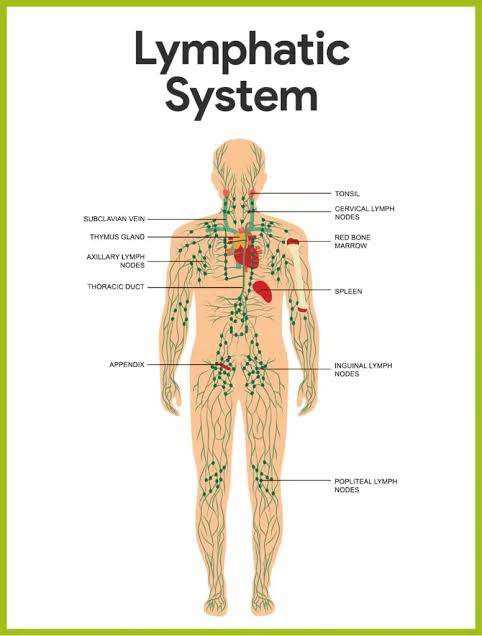
Lymphatic System

Image
LYMPHATIC SYSTEM 1. INTRODUCTION TO THE LYMPHATIC SYSTEM The lymphatic system has three primary functions.  First of all, it returns excess interstitial fluid to the blood. Of the fluid that leaves the capillary, about 90 percent is returned. The 10 percent that does not return becomes part of the interstitial fluid that surrounds the tissue cells. Small protein molecules may "leak" through the capillary wall and increase the osmotic pressure of the interstitial fluid. This further inhibits the return of fluid into the capillaries, and fluid tends to accumulate in the tissue spaces. If this continues, blood volume and blood pressure decrease significantly and the volume of tissue fluid increases, which results in edema (swelling). Lymph capillaries pick up the excess interstitial fluid and proteins and return them to the venous blood. After the fluid enters the lymph capillaries, it is called lymph. The second function of the lymphatic system is the absorption of fats and fat...

cell structure

Image
https://www.slideshare.net/Azeez65/cellstructurepptx